How to Choose a Webflow Developer
If you need to build a website and don't know how to choose a Webflow developer, I hope this guide will help you answer the most important questions and make the right choice when looking for a reliable and professional Webflow agency or freelancer.
The right choice is not always about price, although cost is one of the most important factors for many clients. If you choose a Webflow developer based only on price, you may regret this decision later and end up paying much more or even having to rebuild your Webflow website from scratch.
What to Look for in a Webflow Developer
Before choosing a Webflow agency or Webflow developer, you should consider several important factors that can help you make the right decision, whether you choose a full development team or an experienced freelancer.
Webflow experience
Carefully check how long the developer has been working with Webflow and how many projects they have completed. If their portfolio contains only one or two finished projects, they may be a developer who is just starting their career.
This does not automatically mean you should reject them. They could still be a very skilled Webflow freelancer or agency. However, if you are looking for someone with a strong background and extensive Webflow development experience, this is an important factor to consider.
Portfolio of real websites
Pay close attention to the developer's portfolio. An experienced Webflow developer who has been working with Webflow for a long time should have several real projects to show.
These should not only be mockups or screenshots. Look for complete websites that were actually developed by the agency or freelancer. Ask for direct links to live websites that you can open and review yourself.
Do not focus only on the design. In many cases, a Webflow developer may have been responsible only for the website development and may not have been involved in the original design. This is also important to understand when evaluating their portfolio.
Technical knowledge
Ask the developer to provide access to the website through Webflow Designer so you can see their technical skills and development approach. This can give you much more information than simply looking at a finished website.
Here is a basic five-step checklist to review in Webflow Designer:
- Development methodology — for example, Client-First 2.1 or another structured approach.
- Page structure — each section should be organized clearly and logically.
- Basic SEO settings — check meta titles and descriptions, image optimization, and ALT text. Sometimes animations are prioritized over proper page structure, which can make SEO optimization more difficult. I described a similar example in this case study.
- Responsive design — check how much attention the developer gives to tablets and mobile devices.
- Page loading speed — check whether the website is optimized for good performance.
Even this basic five-step checklist can help you understand how the developer works and how they approach Webflow website development.
Communication and project process
Pay special attention to communication and how quickly the developer responds to your messages.
If you ask about the development process, project progress, or the current stage of the work and the developer does not respond for several hours, this can be a warning sign that communication and the project timeline may become difficult.
A professional developer should maintain clear communication and keep you informed about the current stage of the project. You should always know what is being worked on and what the next steps are.
Reviews and client experience
A strong advantage for a Webflow freelancer is having reviews from previous clients. Reviews may be available on the developer's own website if they have one. You can also check agency reviews on platforms such as Clutch. If you are working with a freelancer, you can ask for links to their profiles on freelance platforms such as Upwork.
Reviews from independent platforms can provide additional information about the developer's communication, reliability, and previous client experience.
If a developer is not willing to provide any way to verify their previous client experience, this can be a warning sign that you should consider carefully.
How to Evaluate a Webflow Developer's Portfolio
Let's move to one of the most important questions: how to properly evaluate a Webflow developer's portfolio and what you should look for.
As mentioned above, a Webflow developer's portfolio should contain live projects with direct links to finished websites. If you can only see screenshots or graphic mockups, ask the developer for live examples before making a decision.
Every agency or freelancer should be able to show real projects they have worked on. However, keep in mind that a developer may have worked on a website several months or even years ago.
After the original project was completed, the website owner may have made changes themselves or hired another developer. For this reason, review several projects and ask the developer which parts of each website they personally developed and which projects they worked on most recently.
Look for live Webflow websites
Open the links to live websites in the developer's portfolio. This allows you to review the design, animations, interactions, and other elements that may require your attention.
Remember that the developer may have been responsible only for the Webflow development, while the website design was created by another designer or provided by the client.
In this case, ask the freelancer or agency which part of the project they were responsible for.
Examples of completed projects should be publicly available whenever possible. You can see examples of Webflow development projects on this page.
Check responsive design
Ask for access to the Webflow Designer for portfolio projects where possible. This allows you to see how much attention the developer paid to responsive design across large screens, tablets, and mobile devices.
High-quality responsive design and correct content display across different devices are important parts of professional Webflow development. They can also affect the overall user experience, accessibility, and technical quality of a website.
Look for CMS-driven websites
Pay attention to how the developer created Webflow CMS Collections for dynamic content, which fields were created, and how those fields were named.
Check how dynamic pages are structured and how easily the content can be managed and displayed.
Things to look for include:
- Dynamic CMS structure
- Semantic HTML5 markup used for blogs, case studies, or other content
- Separate meta titles and descriptions for individual CMS pages
- Optimized image dimensions and file sizes
- Clear and meaningful field names in CMS Collections
Variables
Check whether the developer uses Webflow Variables to make global design changes easier.
If a developer uses Variables as part of their workflow, this can be a major advantage. It allows you to make design changes more efficiently and customize multiple parts of a website from a centralized system.
A professional Webflow agency or freelancer can use Variables for:
- Colors
- Spacing, including margin and padding
- Gaps
- Typography, including font size, text color, line height, and letter spacing
Check whether the developer explains their role
If you hire a Webflow agency, ask who will be responsible for the design, development, and other parts of the website project.
Each person should have a clearly defined role. Also ask whether the agency handles the Webflow development internally or works with external freelancers.
There is nothing wrong with an agency working with independent freelancers or contractors. However, you should clearly agree on responsibilities and project deadlines before starting the work.
If you hire an independent Webflow freelancer who works alone, have a detailed consultation and ask questions that will help you understand how they work, what they will do at each stage, and how much time the project is expected to take.
Ask the freelancer questions such as:
- How long will the complete website take to build?
- How often will the freelancer be available for communication?
- Will they provide updates at each stage of the project?
- Can you request changes during the development process?
- Is an upfront payment required?
- Can the payment be divided between different project stages?
- Is it possible to work through a freelance platform to help protect the payment?
These seven questions can help you understand whether the freelancer is a good fit for your project or whether you should consider other candidates.
Webflow Partners and the Webflow Partner Directory
If an agency or freelancer is a Webflow Certified Partner and is listed in the official Webflow Partner Directory, this can be a positive factor when choosing a developer.
You can browse the official Webflow Partner Directory.
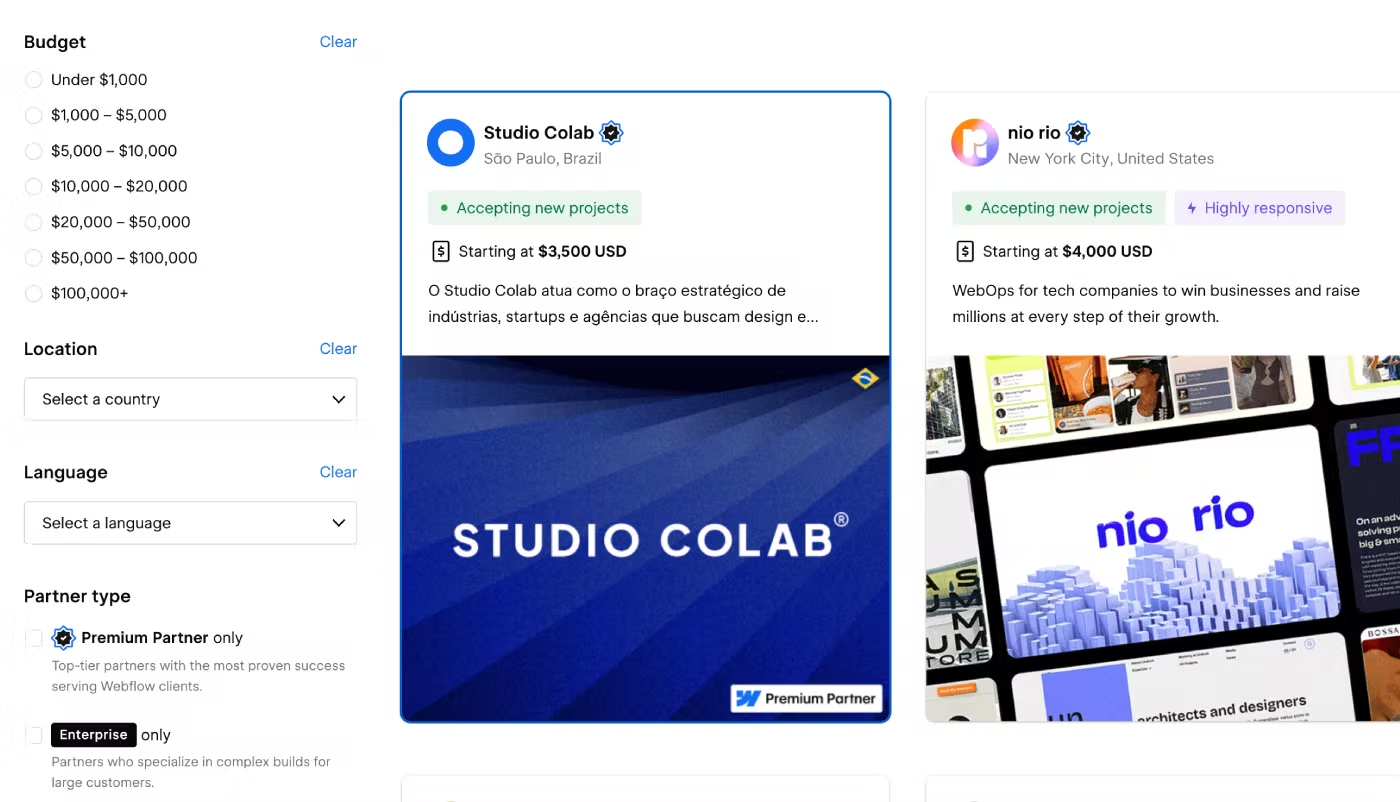
The directory allows you to filter Webflow professionals by several characteristics:
- Project budget — Under $1,000, $1,000–$5,000, $5,000–$10,000, $10,000–$20,000, $20,000–$50,000, $50,000–$100,000, and $100,000+.
- Location — choose a developer or agency based on their location if this is important for your project.
- Language — select the language you prefer to use for communication.
- Business type — choose whether you want to work with an agency or an individual freelancer.
- Services offered — select the services you need from your Webflow developer.
Using the right filters can help you narrow down Webflow developers and agencies based on your requirements, budget, location, and services.
However, you should not rely only on the Webflow Partner Directory. You can find skilled and experienced Webflow developers who are not listed there.
A Webflow Certified Partner status can be a useful trust signal, but it does not automatically guarantee the quality of the work, the right price, or the project timeline. You should still review the developer's portfolio, technical skills, communication, and previous client experience.
How Much Does a Webflow Developer Cost?
The cost of Webflow development can vary significantly depending on who you work with — a Webflow agency or a freelancer.
If you work with an agency, a website development project may cost around $3,000–$15,000 or more. The final price depends on the number of pages, required functionality, project complexity, Webflow CMS Collections, animations, integrations, and other project requirements.
An agency has costs related to the team working on your project, software, workspace, and other business expenses. These costs are usually reflected in the final development price.
If you work with a freelancer, a new Webflow website may cost around $1,000–$3,000–$5,000 or more, depending on the scope of the project. The final price depends on the number of pages, CMS setup, integrations, animations, custom functionality, and other requirements.
One potential disadvantage of working with a single freelancer is the project timeline. One person may work more slowly than a full team, especially when several tasks need to be completed at the same time.
A freelancer may also work on several projects simultaneously, which can affect the development schedule.
For this reason, discuss all project conditions before starting the work. If necessary, use a freelance platform with payment protection or sign a contract. These steps can help protect both sides and create clearer expectations for the project.
If you need Webflow customization services and want to learn more about the cost of this type of work, you can find detailed information here.
Final Results
If you have the budget for a professional website and want to work with a team that can handle the project from start to finish, a Webflow agency may be the right choice.
If you want to reduce development costs, are comfortable with a potentially longer timeline, and prefer to work directly with one person, a Webflow freelancer may be a better option.
In both cases, always check the portfolio with live website links, review several projects through Webflow Designer, and discuss all project requirements, responsibilities, communication, payment terms, and deadlines before starting the work.